Arinto: Back to Winemaking – Back to Grapes – Back to Countries
Top thirteen grapes:
Reds – Cabernet Franc – Cabernet Sauvignon – Malbec – Merlot –
Whites – Chardonnay – Gewürztraminer – Muscat –
Pinot blanc – Pinot gris – Riesling – Sauvignon blanc
Next twenty-five grapes:
Reds – Barbera – Carignan – Gamay – Grenache – Mourvèdre – Petit Verdot –
Sangiovese – Tannat – Tempranillo – Touriga Nacional – Zweigelt
Whites – Albariño – Aligoté – Arinto – Chenin blanc – Malvasia –
Müller-Thurgau – Muscat-Ottonel – Sémillon – Tămâioasă Românească –
Traminer – Ugni-blanc – Viognier – Welschriesling
– and Cava
| Arinto: This is a white Portuguese age-worthy wine grape planted primarily in the Bucelas, Tejo and Vinho Verde wine-growing areas, but also in Alentejo, Bairrada Douro, Minho and Ribatejo. It was first referenced in writing in the 18th c. It is believed that it began its life in the Extremadura region of Spain. In Bucelas, just north of Lisbon , it forms the majority of the local white wine blend, blended with various other local varieties. Elsewhere it is blended with other Fernao Pires and Loureiro.  Image source: wine-searcher.com |
Taste/smell: A high acid wine with lemon-zest notes. Others suggest beeswax, camomile, grapefruit and hazel nut. It can take on rich peach flavors when aged. 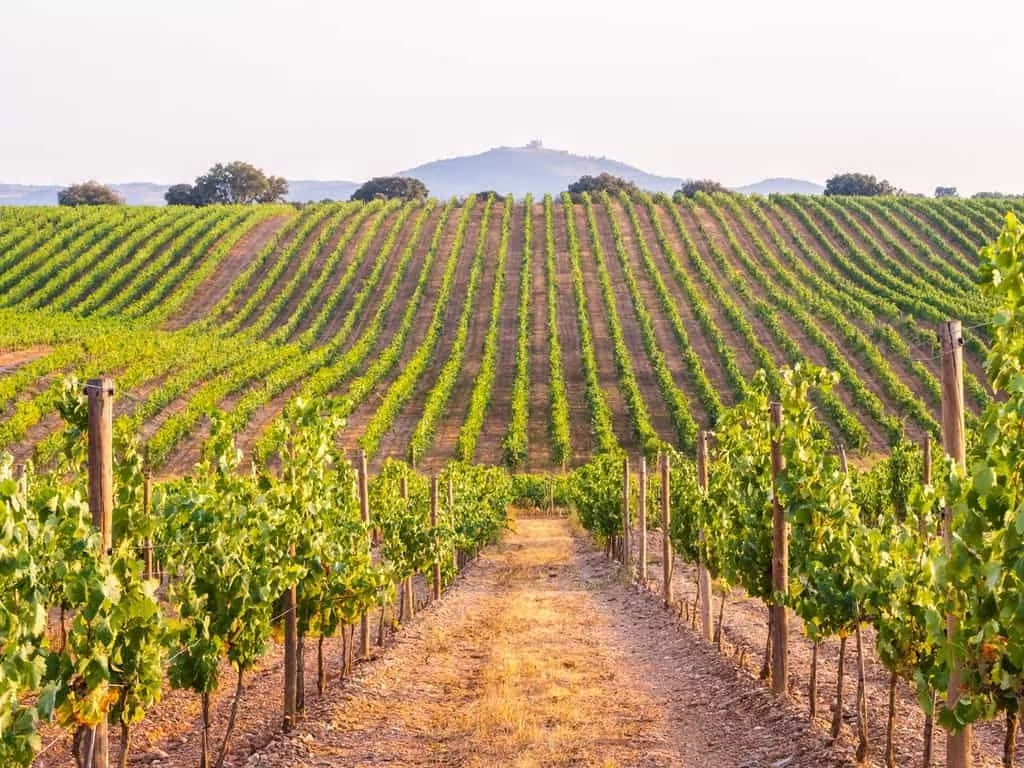 Image source: winetraveler.com Varieties/Mutations It is genetically similar to Trajadura, an old grape variety grown in northern Portugal and northwest Spain. Arinto dos Açores, its name in the Azores, may have a parent-offspring relationship with Verdelho. Arinto Tinto is quite distinct from this grape, being related to Aragonez aka Tempranillo. Arinto de Dão is also not related to the main Arinto family, instead related to Malvasia Fina, aka Bual or Boal in Madeira. | Description:  Image source: goodfoodrevolution.com Its clusters are large and compact, with medium stems. Small to medium-sized berries that are yellowish in colour.  Image source: grapevarieties.info Adult leaves are large, pentagonal, with five lobes and short teeth, |
| Arinto producing countries: Big Five Producers: (overall 42% of vineyards, 64% of wine production and 41% of wine consumption – OIV 2022) Spain: not detected France: not detected Italy: Friuli-Venezia Giulia USA: California Chile: not detected Next Ten Largest Producers: (with big five, responsible overall for 75% of vineyards, 88% of wine production, 64% of wine consumption – OIV 2022) Argentina: not detected Australia: Riverland China: not detected Germany: not detected India: not detected New Zealand: not detected Portugal: Bucelas, Tejo, Vinho Verde and others Romania: not detected South Africa: some known as Erinto Turkey: not detected Others countries: Brazil | Grape is also known as: Arintho, Arintho du Dao, Arinto Cachudo, Arinto Cercial, Arinto d’Anadia, Arinto de Bucelas, Arinto do Douro, Arinto Galego, Arinto Miudo, Asal Espanhol, Asal Galego, Assario branco, Azal Espanhol, Boal Cachudo, Branco Espanhol, Cerceal, Chapeludo, Erinto (S Africa), Malvasia Fina, Pe de Perdiz branco, Pederna and Pedernao. |

Image source: grapevarieties.info
Arinto : Back to Winemaking – Back to Grapes – Back to Countries
Top thirteen grapes:
Reds – Cabernet Franc – Cabernet Sauvignon – Malbec – Merlot –
Whites – Chardonnay – Gewürztraminer – Muscat –
Pinot blanc – Pinot gris – Riesling – Sauvignon blanc
Next twenty-five grapes:
Reds – Barbera – Carignan – Gamay – Grenache – Mourvèdre – Petit Verdot –
Sangiovese – Tannat – Tempranillo – Touriga Nacional – Zweigelt
Whites – Albariño – Aligoté – Arinto – Chenin blanc – Malvasia –
Müller-Thurgau – Muscat-Ottonel – Sémillon – Tămâioasă Românească –
Traminer – Ugni-blanc – Viognier – Welschriesling
– and Cava


