Adieu, the final farewell, an exploration of death!

Buddhist: Forward to Sikhism – Famous Cemeteries - Back to Hinduism
Back to Six largest religions – Religions – Death
Back to Adieu Index - Back to Bob Denton home page
–
Quick Links:
| Definition | Death |
| Buddha | Funeral |
| Schools | Flowers and fruit |
| Central message | Cremation |
| Impermanence | Cloth gifts |
| Simple ways | Amitābha Sutra |
| Samsara | Tibet |
| Rebirth | Shingon |
| Liberation |
–
The fourth largest religion is Buddhism, practised by 7% of the world’s population, over 500m people. It originated 2,500 years ago in India.

Buddhists believe that human life is one of suffering, but that by the practice of good behaviour, of meditation, physical and spiritual labour they can achieve nirvana, enlightenment.

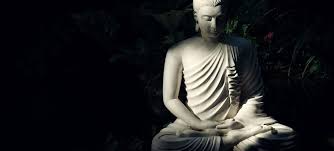
It is based upon the teachings of Siddharta Gautama, the Buddha or ‘the awakened’. He lived in south Asia from the 6th-5th c BCE. Of high birth he renounced his status and took to a life of begging and meditation. He attained enlightenment at Bodh Gaya in India and set about teaching and creating a monastic order.
Today there are several main schools of Buddhism:

- Theravāda this is Pāli and literally means the ‘School of the Elders’ and it preserves the original teachings;
- Mahāyāna places the emphasis less on seeking nirvana and more on developing knowledge and wisdom;
- Vajrayāna pursues practices that use many tantras, mantras, dharanis, mudra and mandalas.
- One branch of the Vajrayāna is Tibetan Buddhism, Dge-lugs-pa, or Gelukpa, which is the school pursued by the Dalai Lama.

There is however no central authority and no belief in gods.
Buddha’s central message is the Four Noble Truths and the Eightfold Path. The Four Noble Truths are the truth of suffering, the truth of the cause of suffering, the truth of the end of suffering and the truth of the path that leads to the end of suffering.

Simply this means that suffering is a reality, it has causes, it has an end and there is a route to end it. The Eightfold Path requires the believer to pursue the right view, the right aspiration, the right speech, the right action, the right livelihood, the right effort, the right mindfulness, and the right concentration.
The main principles of Buddhism are karma, rebirth and impermanence. The Buddhist’s commitments are therefore to abstain from lying, stealing, intoxication, sexual misconduct and from the killing of any living being. Instead, they need to develop an inner wealth – mindfulness, investigation, energy, joy, tranquillity, concentration and equanimity.

A simpler Threefold Way focuses on ethics, meditation and wisdom. Buddhism also promotes a Middle Way or Middle Path that avoids the extremes of asceticism and sensuality.
Life and death are both part of existence, consciousness, or the spirit, and this continues after death and may be reborn. Death reminds the survivors of the impermanence of life, and gives them the opportunity to assist the deceased in their transition to their new existence, in the cycle that is samsara. That rebirth may be as an animal or a human, and is shaped by their previous life.

Rebirth can be into one of six realms:
- the human, the only realm where nirvana may be achieved and samsara escaped;
- the gods, where power and wealth is obtained but not wisdom or nirvana;
- the demi-god realm, powerful and strong, but envious and angry;
- the animal realm, those with no desire to change, they prey on each other;
- hungry ghosts, addictive and obsessive, with small mouths and big stomachs;
- the hell realm, these are the angry, aggressive sinners;
This is considered temporary as they will get another chance.

However, death is also the opportunity to be liberated from the cycle of birth, death and rebirth, but only if they have become arhat, a saintly person who has developed insight into the true nature of existence.
At death it is the custom to honour the dead for three, five or seven days. White sheets are put on the floor of the mourning room, and the family wear white. A calm and peaceful environment is maintained. They reflect on the good deeds of the deceased. Other mourners wear black or dark clothing, nothing expensive and no bling.
It is the custom not to touch the body for four hours after death because the soul does not leave the body immediately. Thereafter the body is cleansed, dressed and kept cold, but is not believed to have any further significance. But the body is retained in the home for three to five days, with scripture being read to ensure that the soul leaves purgatory. Buddhists do agree to organ donation, and view this as a good deed.
A Buddhist funeral has no universally agreed rites, but the prime objective is to assist with the soul’s passage on to the next life. The funeral is usually held seven days after death.

The service is performed by a monk, at a monastery or in the home, usually with a sermon by the monk. The body is placed in an open casket wearing simple clothes, as the monks lead the ceremony. A photo of the deceased and an image of buddha is place nearby. Mourners approach the casket and dip the head with hands held in prayer, then offer condolences to the family. The monk leads the chants, then performs the last rite.

Family and friends lay flowers and fruit around the body and light candles and incense. There is then a procession to the site of the cremation. Mourners often use sticks when walking to suggest they need support in their grief. They chant or sing sutras, or prayers, deliver eulogies and often ring bells or strike gongs.
The body is usually cremated. The ashes are placed in an urn, the family can opt to keep these, bury them or spread the ashes at a place of personal importance. Buddhist memorial services are held on the 3rd, 7th, 49th and 100th day. During the initial wake period the family should not trim hair or nails, and they should avoid entertainments. For the first forty-nine days family should not visit friends or relatives, but instead reflect on life and make offerings weekly or fortnightly. For the first hundred days they should not wear bright clothes or attend weddings or funerals.

One Theravada custom is to give an offering of cloth, known as the forsaken robe or paṃsukūla to the monk, symbolising the rags that monks originally used as robes. These are not rags but cloth that can be used to create robes. The monk returns, usually on the sixth day after the funeral, to preach a sermon to the relatives and neighbours, this is usually followed by a meal.

Mahayana tradition has ceremonies performed across the forty-nine days between death and rebirth, with family and friends chanting and reading scriptures to assist the soul’s passage. The Amitābha Sutra is recited, it is considered significant by Mahayanas. There is also a practice of exposing the corpse, the deceased is put out in the open without a coffin, to permit hungry birds and animals to eat. The remains are then cremated. Similarly, Mahayana followers may place the body in a cave or grotto, left open for the animals to feed on it.

Tibetan Buddhists have little in the way of firewood, and so evolved a ritual called sky burial, or bird scattering. The body is placed on a mountainside and incense burned to attract vultures. The speed with which they arrive is considered a measure of the deceased’s spiritual advancement. Using the body to feed the wildlife is an act of dana, charity, and displays metta, loving kindness, and karuna, compassion. This assists the soul in achieving nibbana.

One Buddhist sect of Shingon in Northern Japan concluded that physical punishment was the path to enlightenment, so they practised self-mummification, or Sokushinbutsu. The followers took a decade to build up the poison their tissues. Hundreds were said to attempt it but only twenty-four have been found to have achieved mummification. Investigations suggest this was because of the high levels of arsenic found in the springs around the temple.

Buddhist: Forward to Sikhism – Famous Cemeteries - Back to Hinduism
Back to Six largest religions – Religions – Death
Back to Adieu Index - Back to Bob Denton home page


